Common Mistakes People Make With Free Safety Course and Orientation for Electric Bikes in Key West
You've rented an electric bike in Key West. You're excited. The ocean breeze is calling. But before you clip in and hit Duval Street, there's a free safety course and orientation waiting for you. Many riders treat this as a box to check. They rush through it, skip key sections, or don't ask questions they should be asking. That's understandable when you're on vacation and time feels limited. But these oversights can turn a great day into a frustrating or even unsafe one. Let's walk through the real mistakes people make with our free safety course and orientation so you don't have to learn the hard way.
Mistake 1: Skipping the Orientation Because You "Already Know How to Ride a Bike"
This is the most common one. You rode a bike as a kid. You've rented beach cruisers before. So why sit through an orientation, right?
Here's the thing: electric bikes are not regular bikes. The pedal-assist system responds differently than you expect. The weight distribution is different. Braking feels different. In Key West, you're riding on streets you don't know, dealing with sand, heat, and traffic patterns that are nothing like home. The orientation covers how the throttle response works, where the power cuts off, how to shift gears smoothly, and how to brake without locking up the front wheel on sand or loose pavement. Ten minutes of learning prevents twenty minutes of frustration or worse. Riders who skip this often end up stopping mid-ride to figure out why the bike isn't responding the way they thought it would.
Mistake 2: Not Testing the Brakes and Lights Before You Leave
During the safety course, we show you where the brakes are, how they feel, and how to check the lights. But many people nod along and then immediately head out without actually squeezing the brakes or checking that the front and rear lights work. You don't want to discover a light issue when you're riding back at dusk, or find out the rear brake is softer than you expected when you're barreling down a hill toward an intersection.
Take two minutes. Brake in the parking area. Watch the response. Test both the front and rear lights in daylight so you know what they look like when they're on. This simple step, which is literally part of the orientation, prevents most mechanical surprises.
Mistake 3: Not Asking About the Included Lock and Basket Setup
The free safety course includes information about the front basket and lock that come with your rental. Many riders half-listen to this part because they assume a lock is just a lock. But Key West has specific theft hotspots, and the way you secure your bike matters. We cover where to lock your bike, what to lock it to, and how to use the basket safely so you don't overload the front end and affect steering.
People who skip this guidance often lock their bikes in sketchy spots, overload the basket with heavy items, or don't secure loose items properly. Then they get back to find a bike that's been messed with or arrive at their destination with a scattered basket. The orientation exists to prevent these exact problems.
Mistake 4: Dismissing the Helmet Fit as "Good Enough"
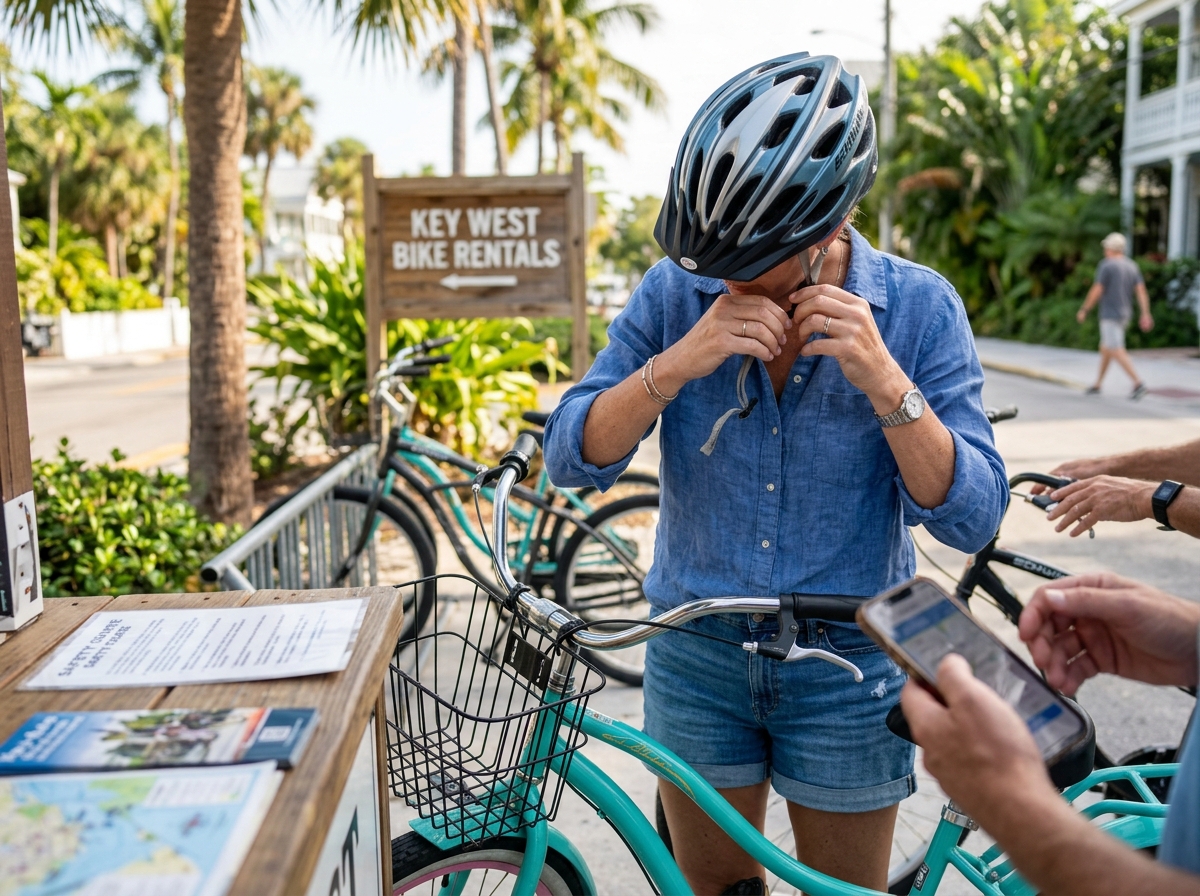
We provide helmets and show you how to fit them properly during the course. A loose helmet is useless in a fall. A helmet that's too tight will give you a headache and you'll be tempted to take it off. The orientation covers the two-finger rule (you should fit two fingers between the helmet and your forehead) and how to adjust the straps.
Many riders put on a helmet, give it a quick nod, and leave. Then halfway through their ride, they realize it's sliding or uncomfortable. By that point, they're annoyed and might be tempted to ride without it. Five seconds of proper adjustment during the orientation saves you from this. And more importantly, it actually protects you if something goes wrong.
Mistake 5: Not Clarifying the Pedal-Assist Levels and Battery Range
The free safety course explains the different pedal-assist levels and how they affect battery life. This is critical information for planning your route. But many riders zone out during this part or think they'll just figure it out as they go.
Here's what happens: someone sets the bike to maximum assist, rides aggressively for an hour, and then has minimal battery left for the ride back. Or they don't understand the difference between levels and keep the bike on high assist for gentle cruising, draining the battery faster than necessary. The orientation explains how to match assist levels to terrain and distance. If you're planning a long ride to Fort Zachary Taylor State Park, this matters. Ask questions during the course. It takes two minutes and saves your entire afternoon.
Mistake 6: Not Asking About Traffic Patterns and Safe Routes in Key West
Key West traffic is unique. Narrow streets, one-way routes, pedestrians everywhere, and tourists who don't follow traffic rules. The safety course and orientation include guidance on Key West-specific riding conditions and recommended routes. But many people treat this like background noise and assume they can just wing it with GPS.
GPS will get you where you're going, but it won't tell you which streets have the most potholes, which intersections get congested at certain times, or where locals know the safest routes. Asking during the orientation, or even after, gives you insider knowledge. It's the difference between a stressful ride and a smooth one.
Mistake 7: Not Bringing Up Concerns About Your Physical Abilities
The orientation is a conversation, not a lecture. If you have concerns about your balance, your knees, your stamina, or anything else physical, the orientation is the time to mention it. We can adjust recommendations, suggest easier routes, or help you understand how the pedal-assist will actually make certain things easier (like hills or longer distances).
People often stay quiet because they don't want to seem out of shape or inexperienced. But that's exactly what the orientation is for. Speak up. The more we know, the better we can set you up for a great ride.
The free safety course and orientation for electric bike rentals in Key West isn't a formality. It's designed to answer the questions you don't know you have yet and prevent the problems that most commonly derail rental experiences. Don't rush it. Ask questions. Test the equipment. Clarify the settings. Understand the local context. You'll spend an extra five to ten minutes, and you'll gain confidence and knowledge that makes the entire ride better. Ready to book your rental and orientation? Contact us to schedule your free safety course and get ready to explore Key West the right way. ## ABOUT THIS CUSTOMER Timothy is working to grow Google rankings and generate more calls through customer reviews. If you've rented from us before, he's reaching out to ask for a review on Google. Those reviews are critical for visibility. If you're planning your first rental, take the orientation seriously. Then, after your ride, consider leaving a review. It helps other riders find us and helps Timothy keep growing the business.